The best Korean beauty products, and the hype worth skipping
The four Korean beauty products to buy, based on expert consultation, are a salmon DNA recovery ampoule, an NAD serum, a milky hair treatment and defining lenses. Here is what each does, and the evidence.
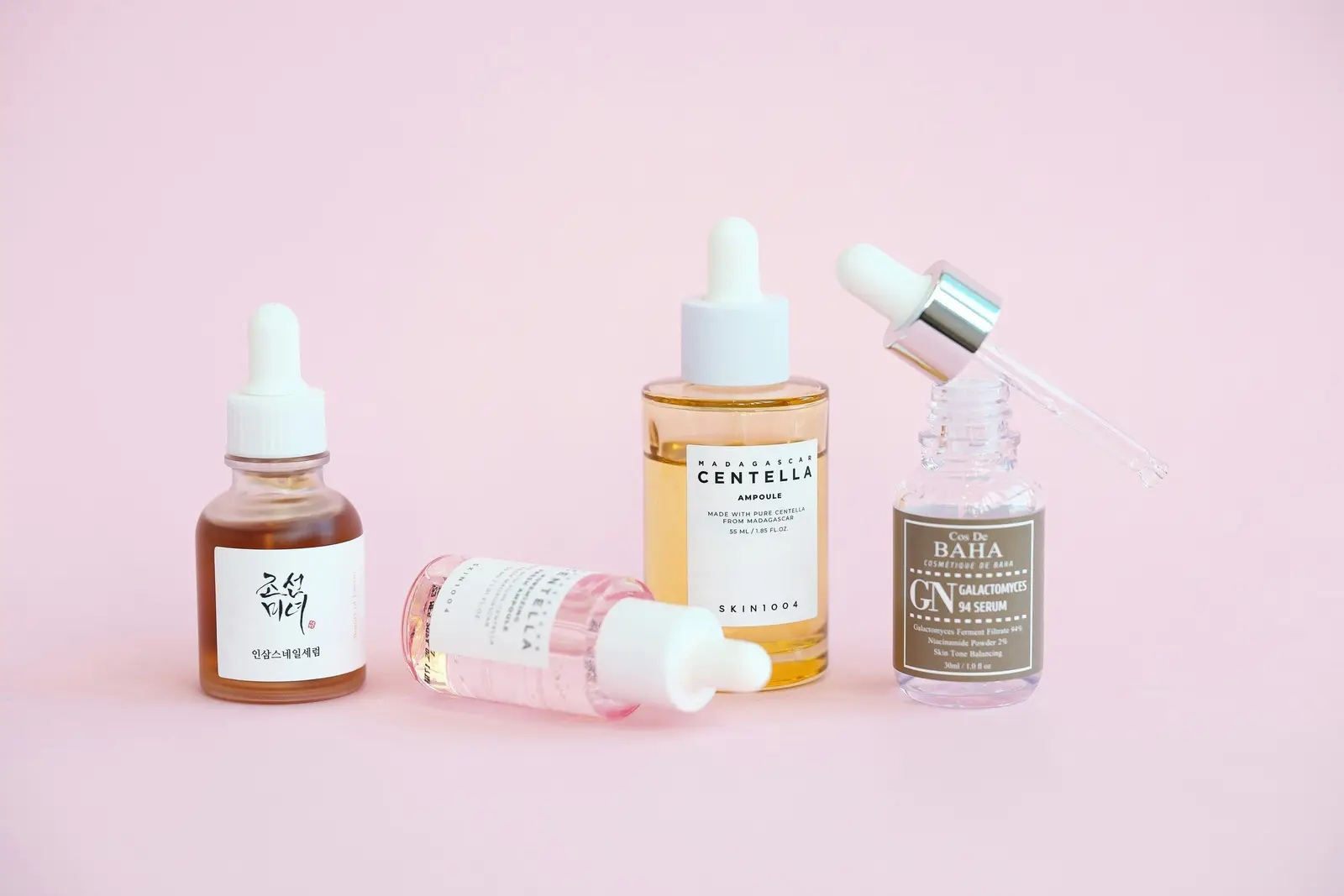
The best Korean beauty products on ELLE Korea's current list come down to four: a salmon DNA ampoule for skin recovering from laser treatment, an NAD ampoule for a stressed barrier, a milky hair treatment you can reapply through the day, and contact lenses that define the outer ring of the iris. The editors compiled that list with the dermatologists and hairstylists they consult, which is why it leans towards repair. Each pick has a specific job attached, and knowing the job is most of the buying decision.
What the four picks have in common
Each one is bought to fix something: skin after a procedure, a barrier that stings, hair that feels rough after a bleach, eyes that want definition. None is sold as an all-in-one, which makes them easier to judge. You can tell within a month whether a recovery ampoule helped, because the skin either settled faster or it didn't.
The other shared trait is format. Korean brands sell texture hard: bubbles, milky liquids, heart-shaped patches. Texture decides whether you'll actually use the thing, so pick the format you enjoy. It tells you very little about results.
The post-laser recovery ampoule
Dr. Sujung Yoon, a family medicine specialist at Yoon Sujung Clinic, named a salmon DNA product as her pick when skin needs intensive recovery after laser treatment. In her description, the actives extracted from salmon DNA support the skin's cell turnover cycle, and with continued use skin density and elasticity firm up.
Salmon DNA appears on an ingredient list as PDRN. It's a repair ingredient with a large clinic marketing budget and a small published evidence base for topical use. After a laser session the realistic benefit is hydration and comfort while your skin rebuilds, which is worth paying for if your clinic has told you to leave the barrier alone for a week. The firmness claim is where I'd hold back: skin density changes usually come from collagen, and the published work on topical PDRN changing it is thin.
If your skin has had a procedure, your clinic's aftercare instructions come first. A recovery ampoule sits underneath them.
The NAD ampoule for a stressed barrier
Dr. Suhyun Lee, a dermatologist at Pure Dermatology Clinic, recommends an ampoule built on NAD, which she calls a core fuel for skin cells. The detail that matters in her description is texture: it absorbs fast, suits summer, and doesn't set off breakouts while it balances moisture and nourishment.
NAD is the name on the bottle. The molecule with real topical evidence behind barrier support is niacinamide, which at 5% calms redness and helps skin hold water. NAD and niacinamide are chemically related, so a 5% niacinamide serum is the cheaper way to find out whether that outcome is what your skin needed. If you like the NAD ampoule's texture, buy it for that.
One rule either way: patch test on your jaw for three nights before you commit to a full face.
The milky hair treatment
Hairstylist Jihye Oh picked a milky leave-in that she says conditions the hair instead of coating it, absorbs quickly, and can be reapplied before and after styling without grease or residue on your hands. The reapplication claim is the useful one. Most leave-ins build up, and if this one doesn't, it earns a spot in a bag.
Fine and medium hair takes a milky texture well. Coarse or tightly coiled hair usually needs more oil and a heavier cream.
Hair is dead keratin, so nothing in a bottle feeds it from inside. A good conditioner smooths the cuticle, cuts friction between strands and slows water loss. Judge this one on how the hair combs when wet and whether your roots are still light by the afternoon.
The defining contact lenses
The lens pick gets one line in the original list: a sharp, defined outer ring with the inner colour kept clear. If you need a prescription, that's a conversation with an optometrist, not a checkout page.
Coloured lenses bought without a fitting are the one item here with a real risk attached. A lens that sits badly can scratch the cornea, and the damage isn't always obvious at the time. Get fitted, get the prescription, and don't share lenses.
What the list leaves out
Prices. ELLE Korea's page shows discounts that were live at publication, which tells you nothing about what you'll pay in your market. Names travel badly as well: Korean brands reformulate and rename products for export, so the bottle you find on a shelf may not match the one reviewed. Read the ingredient list on the box, not the description on the website.
The bigger gap is evidence. Salmon DNA and NAD are sold on repair stories that have less published support than their price tags imply. The two ingredients in Korean skincare with solid backing are sunscreen filters and retinoids. If you're deciding where the money goes, those come first.
How to read a K-beauty ingredient list
Actives are usually printed in English on the back of the box, even when the front is all Korean. A few worth recognising:
- PDRN, also listed as salmon DNA: repair marketing, hydration benefit you can actually feel
- Niacinamide: barrier support and less redness at 5%
- Centella asiatica, sold as cica or madecassoside: soothing, and common in barrier creams
- Panthenol: holds water in the skin and eases tightness
- Hyaluronic acid: binds water while it's there, does little once it has evaporated
Fragrance sits near the end of most lists and is the first thing to cut if your skin stings. Alcohol denat high up means a light, fast-drying formula, which suits oily skin and not a damaged barrier.
A simple routine that uses one of the four
Build the routine first, then decide which pick fits into it.
Morning: rinse with water or a gentle cleanser, the NAD ampoule (or a 5% niacinamide serum), a moisturiser, then sunscreen at SPF 50. The sunscreen does more for how your skin ages than any ampoule on this list.
Evening: cleanser. Add an oil cleanser first only if you wore makeup or a water-resistant sunscreen. A retinoid two or three nights a week at 0.2% to 0.3%, moisturiser on top. On the other nights, the ampoule and moisturiser.
After a laser session, follow the clinic's instructions and hold the retinoid for a few days. The recovery ampoule fits in there, and that's the one moment on this list where a repair product is doing the main work.
Who should skip all of this
If you have active acne, a rash that won't settle, or a mole that's changing, see a dermatologist before you buy another serum. If you won't wear sunscreen daily, skip the retinoid and the ampoule and put the money into sunscreen instead. If your skin is calm, a cleanser, a moisturiser and sunscreen are enough; the recovery ampoule is for skin that has been through something.
Frequently asked questions
- What is salmon DNA in skincare?
- PDRN, a DNA fragment derived from salmon. It's sold as a repair ingredient for skin recovering from laser treatments. Expect hydration and comfort. The evidence that a topical version changes skin density is limited, so treat firmness claims as marketing.
- Do Korean beauty products work better than Western ones?
- No ingredient works better because it's Korean. Korean brands get new actives to market faster, so you'll find PDRN and NAD there first. The basics that do the most, sunscreen filters and retinoids, work the same in any language.
- What order do I use an ampoule?
- After cleansing and before moisturiser. Run thin textures first: toner, then ampoule, then cream, then sunscreen in the morning. If you use a retinoid at night, apply it to dry skin first and use the ampoule on your other nights.
- Can I use an NAD ampoule with retinol?
- Usually, but don't start both in the same week. Use the ampoule for two weeks, then add a low-strength retinoid on alternate nights. Stop the retinoid if stinging lasts more than a few minutes.
- Is a ten-step Korean routine necessary?
- No. Cleansing, moisturising and sunscreen cover most of what skin needs. Extra steps earn their place when they solve a specific problem. Most ten-step routines are a sales format with a routine attached.
- Are coloured contact lenses safe?
- With a prescription and a proper fitting, yes. Bought online without either, no: an ill-fitting lens can scratch the cornea, and infections can follow. See an optometrist for the fit before you order.
Sources
Further reading
Tiffany gold gifts: 3 pieces worth it, and who should skip
Three 18-karat yellow gold Tiffany pieces, matched to the person you're buying for, plus what to check on size, metal color and returns before you pay.
Slingback heels are back for 2027, and two-tone is the pick
Slingback heels are back in style for 2026, and the pair driving the trend is two-tone: a contrast toe cap, often square, modeled on Chanel's 1957 design.

Best Zara coats right now: 3 checks before you buy one
The Zara coats worth buying this season, from a 100% wool Limited Edition to a reversible two-in-one, plus the composition check that decides whether a coat is warm.